The physical workplace undergoes a constant transformation driven by cultural shifts and technological advancements. Understanding how office furniture design is evolving is essential for any business looking to optimize its environment for maximum efficiency. What people sit on and work at dictates their daily productivity and long-term physical health. Today, organizations recognize that a supportive environment directly influences critical business outcomes and revenue, making the integration of high-quality modern office furniture in Richland a cornerstone of corporate strategy.
Shifting from the Rigid Workplace
Decades ago, corporate environments focused heavily on strict uniformity and rigid organizational structures. The traditional office favored strict hierarchy and highly standardized equipment. Executive leaders occupied large private offices equipped with heavy, dark mahogany desks and premium leather seating that signaled status rather than promoting actual workflow or comfort. Meanwhile, general staff members sat in isolated cubicle farms with basic seating that ignored human biomechanics and restricted movement.
This rigid structure created psychological barriers between different levels of an organization, stifling the flow of information. Business leaders eventually recognized that these static environments actively hindered communication and creative problem-solving. This critical understanding sparked the initial transition to open, interactive floor plans.
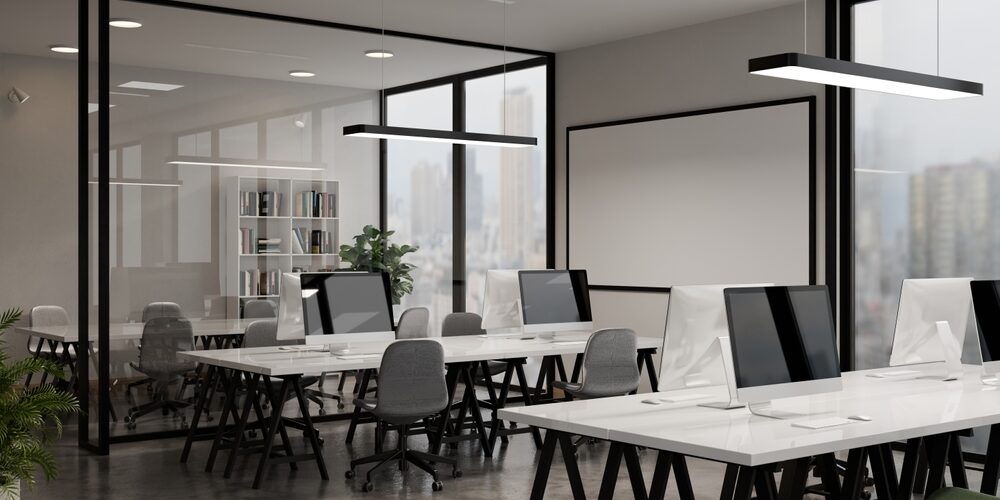
Modern office design focuses on breaking down structural silos to encourage an integrated, agile workforce. This shift has paved the way for diverse furniture solutions that cater to a wide variety of professional tasks and personal preferences, prioritizing natural light, open sightlines, and human-centric experiences.
Employee Comfort: Prioritizing Wellness With Ergonomics
A profound shift occurred when medical professionals highlighted the physical dangers of prolonged sitting. Organizations placed an increased focus on physical well-being to reduce healthcare costs and minimize daily absenteeism. Employee comfort became a primary consideration for facility managers and corporate purchasing departments.
This health-conscious approach led directly to the widespread adoption of ergonomic furniture across corporate campuses. Modern office chairs actively support the natural curvature of the human spine, offering adjustable lumbar support, movable armrests, and customizable seat depth.
Furthermore, the introduction of height-adjustable desks has revolutionized how people interact with their primary workstations. By allowing users to alternate between sitting and standing, these furniture systems promote better circulation and reduce fatigue. Beyond chairs and desks, ergonomics now encompasses adjustable monitor arms, keyboard trays, and specialized footrests. When the physical strain of work is minimized, mental clarity and focus naturally improve.
Companies like Freeform elevate this strategy by conducting space assessments to specify precisely customized ergonomic setups, making sure that physical infrastructure matches the physiological needs of a diverse workforce.
Collaborative Work: Fostering Teamwork Through Design
The rapid rise of agile methodologies required spaces that actively foster teamwork and rapid communication. Collaborative work demands physical environments that allow people to gather spontaneously and share ideas without friction. Consequently, static cubicles have given way to fluid, multi-purpose open areas.
Corporate interior designers respond by creating specific collaborative zones dedicated exclusively to group projects and brainstorming sessions:
- Lounge Seating: Closely mimics the comfort of residential spaces, encouraging informal conversations and breaking down traditional hierarchical barriers.
- Modular Systems: Allows companies to quickly reconfigure areas to suit different group sizes and evolving daily activities.
- Vibrant Visuals: Incorporates bold colors and varied textures to stimulate creativity and energy, reflecting the brand’s personality.
Teams can now move freely between individual workstations and comfortable group settings throughout the workday. Because of this dynamic flexibility, the office furniture used in these spaces must be lightweight, durable, and easily reconfigurable.
Hybrid Work Solutions: The Power of Modular Systems
The massive global shift to hybrid work forced companies to completely rethink their commercial real estate strategies. As staff members split their time between home and the commercial building, static assigned desks became highly inefficient. Organizations urgently need adaptable furniture solutions that can accommodate fluctuating daily headcounts and shifting team dynamics.
Hybrid work models require physical spaces that can transition rapidly based on immediate team needs. Facilities teams increasingly rely on modular office furniture to create these agile environments. These lightweight components allow staff to rearrange their surroundings without requiring professional installation crews or specialized tools.
Modern modular furniture systems include movable acoustic partitions, nesting conference tables, and mobile digital whiteboards. A truly flexible office can host a large training seminar in the morning and transition to individual hoteling workstations by the afternoon. This versatility maximizes square footage efficiency while giving employees complete autonomy over how they utilize their daily workspace.
Technology Integration and Connection Security
Advanced digital technology dictates the fundamental structural requirements of modern office spaces. Workers carry multiple electronic devices that require constant power and highly reliable network access, meaning that modern office furniture in Boise must accommodate complex technological requirements.
Leading commercial manufacturers embed sophisticated wire management systems directly into motorized desks and large conference tables. Advanced cable management keeps work surfaces entirely clear of hazardous and unsightly wire clutter, preventing accidental trips while maintaining the clean aesthetic that defines modern professional spaces.
Protecting sensitive corporate data requires careful planning regarding physical network access points in open areas. Proper site connection protocols prevent unauthorized individuals from accessing secure information through exposed physical ports. Freeform’s deep expertise in technology-integrated furniture procurement makes sure that your power, data, and secure physical connections are built right into the framework of your desks and conference systems, maintaining total network integrity.
Sustainability and Acoustic Sound Management
As global awareness of environmental issues grows, the demand for sustainable office furniture has reached an all-time high. Modern organizations seek products made from eco-friendly materials to align with their corporate social responsibility goals. Top-tier furniture design now relies heavily on recycled ocean plastics, reclaimed wood, low-VOC finishes, and FSC-certified wood. This commitment to sustainability promotes a circular economy and improves indoor air quality.
Simultaneously, managing acoustics is one of the most significant challenges of the open office environment. Without traditional walls, sound travels easily, leading to distractions. To combat this, modern furniture design incorporates advanced acoustic solutions:
- Acoustic Pods & Phone Booths: Small, enclosed spaces that provide a private area for confidential calls or deep work without requiring a permanent private office.
- Sound-Absorbing Panels: Fabrics and acoustic felt dividers strategically placed to dampen sound and reduce echoes.
- High-Backed Lounge Units: Seating engineered with porous, textured materials designed to absorb ambient noise in busy pathways.
When the work environment is acoustically and environmentally optimized, employees report significantly lower stress levels and higher overall job satisfaction.
Balancing Personal Space and Corporate Culture
While open-plan offices promote collaborative work, they can sometimes compromise an individual’s need for personal focus. Modern office furniture design seeks a calculated balance between these two competing needs by introducing targeted “neighborhoods” within a larger floor plan.
By using office furniture to define specific team zones, companies create a localized sense of belonging and community while maintaining a cohesive overall brand identity. Within these neighborhoods, modular systems allow teams to customize their layout to fit their specific workflow. Ultimately, the goal of modern office furniture is to support the human element of the business.
Guide: Upgrading Workstations for Modern Technology
1. Assess Power and Connection Requirements
Evaluate the exact number of devices each employee uses daily to determine necessary outlet capacity and data security requirements.
Tip: Always plan for at least two extra power sources per workstation to accommodate future hardware additions and smart furniture upgrades.
2. Implement Integrated Cable Management
Install under-desk trays, vertical spine managers, and surface grommets to organize wires effectively and eliminate safety hazards within the office space.
3. Integrate Smart Hubs and Structural Security
Incorporate wireless charging and high-speed data ports directly into the furniture design for connectivity while maintaining strict physical port security.
Partner With Freeform
Transforming your office into an agile, human-centric environment requires more than just buying new desks, it requires a complete workplace strategy. Freeform provides premium contract furniture, architectural walls, and custom design-assist services that blend style, ergonomics, and technology integration. Whether you are navigating a hybrid workforce redesign or completely optimizing your commercial footprint, Freeform handles everything from initial spatial logistics to final installation.
Ready to redefine your workplace? Contact Freeform today to explore our products and schedule an expert consultation with our space planning team.